14 Concrete, in construction, structural material consisting of a hard, chemically inert particulate substance, known as aggregate (usually sand and gravel), that is bonded together by cement and water. terms
In the following glossary we will see the different ways in which concrete can be worked, in order to obtain a good result. As we will see some example images for further explanation.
Air-entrained Concrete
Noun
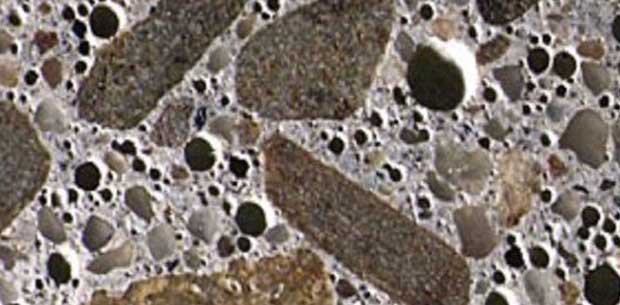
Air-entrained concrete contains billions of microscopic air cells per cubic foot. These air pockets relieve internal pressure on the concrete by providing tiny chambers for water to expand into when it freezes. Air-entrained concrete is produced using air-entraining Portland cement, or by the introduction of air-entraining agents, under careful engineering supervision, as the concrete is mixed on the job. The amount of entrained air is usually between four and seven percent of the volume of the concrete, but may be varied as required by special conditions.
Example: If an air - entraining cement is heavily whisked, as much as 60 per cent of air may be drawn into the concrete.
en: Hormigón con aire incorporado
Architectural Concrete
Noun
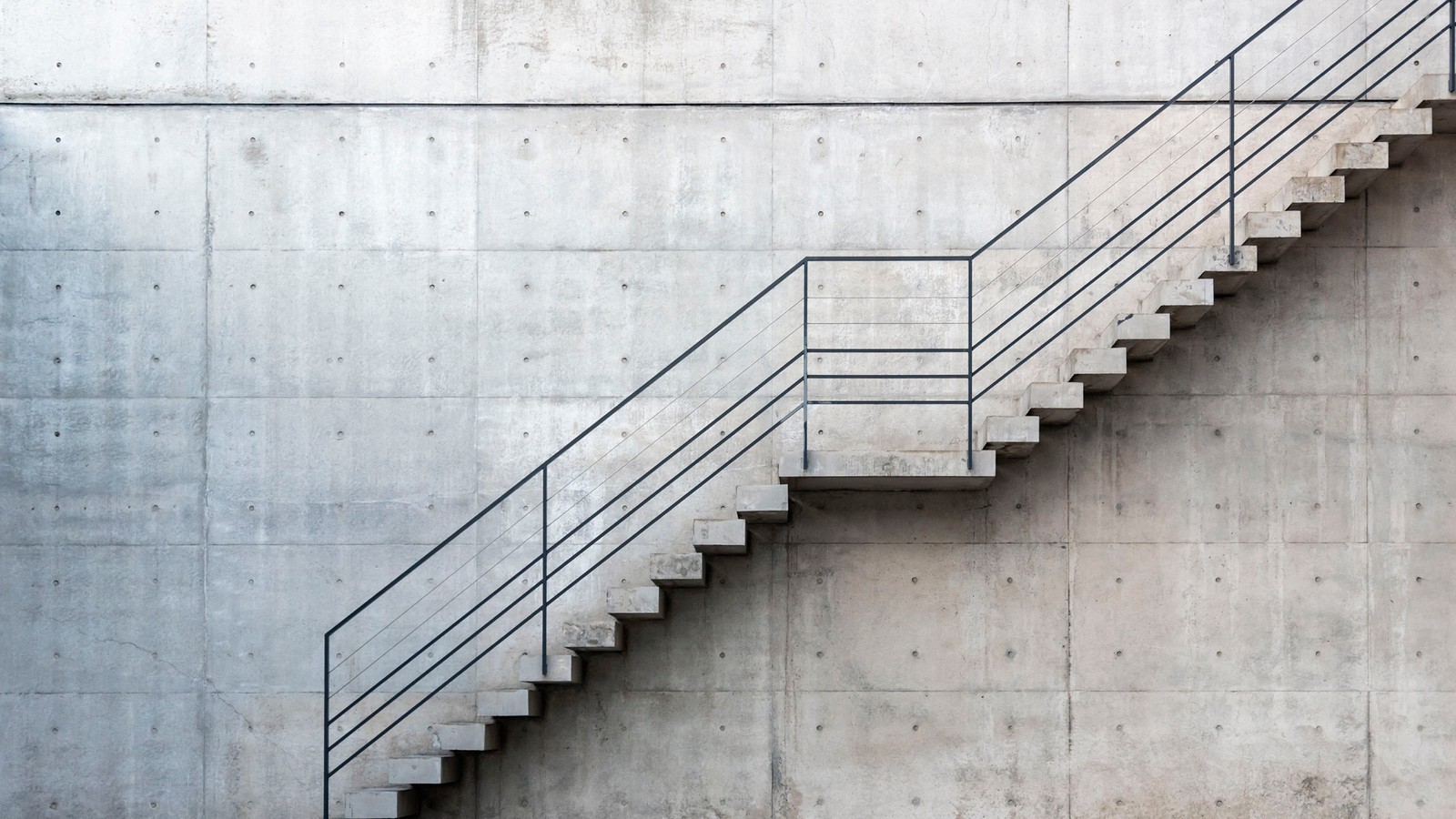
Architectural concrete is concrete that will be permanently exposed to view and therefore requires special care in selection of the concrete materials, forming, placing, and finishing to obtain the desired architectural appearance.
Example: Architectural Concrete for general building applications of specially finished formed concrete.
en: Hormigón Arquitectónico
Asphaltic Concrete
Noun
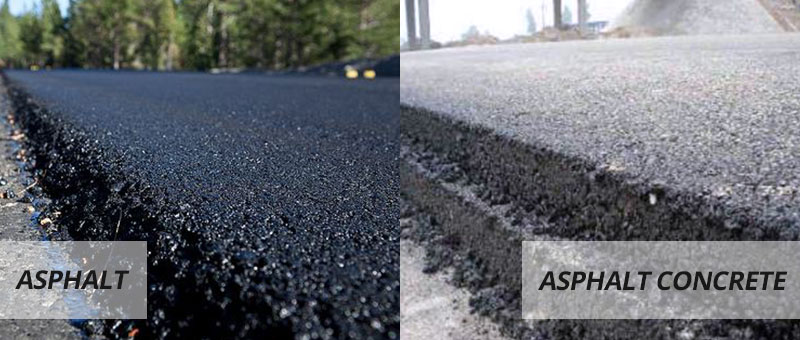
Asphalt Concrete is a composite material commonly used in construction of roads, highways, airports, parking lots, and many other types of pavement. It is commonly called simply asphalt or blacktop. The terms “asphalt concrete”, “bituminous asphalt concrete” and the abbreviation “AC” are typically used only in engineering and construction documents and technical literature where the definition of “concrete” is any composite material composed of mineral aggregate glued together with a binder, whether that binder is Portland cement, asphalt or even epoxy.
Example: Road surfaces are often made from asphalt concrete which uses bitumen as a matrix.
en: Hormigón Asfáltico
Cellular Concrete
Noun
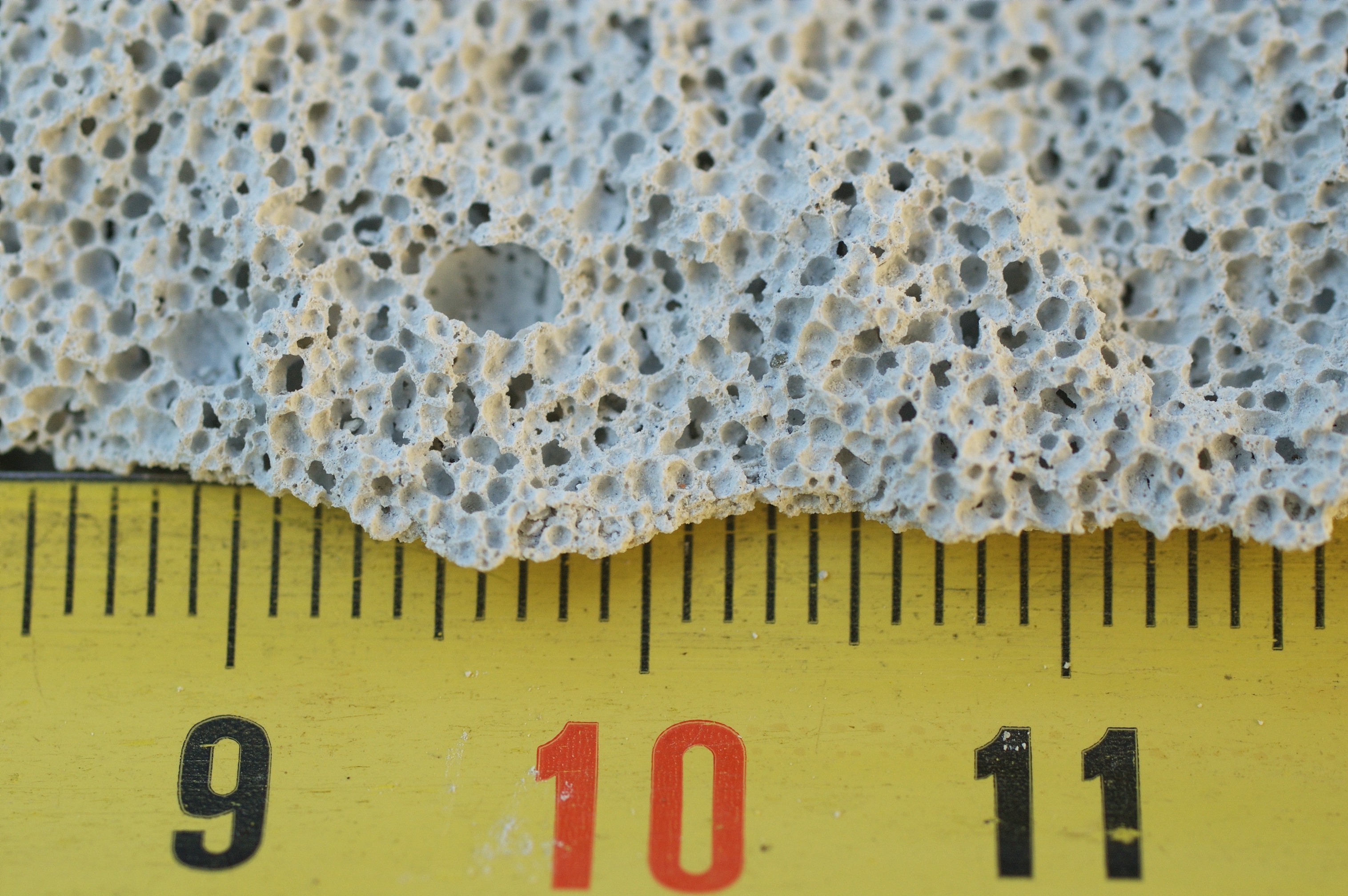
Cellular concrete is a special engineered concrete manufactured by mixing Portland cement, sand, fly ash, water and pre-formed foam in varied proportions to form a hardened material having an oven-dry density of 50 pounds per cubic foot (PCF) or less.
Example: The dual approach-modeling concrete cellular processes and, at the same time, searching for general laws-has been a characteristic of Reinhart's work.
en: Concreto Celular
Colored Concrete
Noun
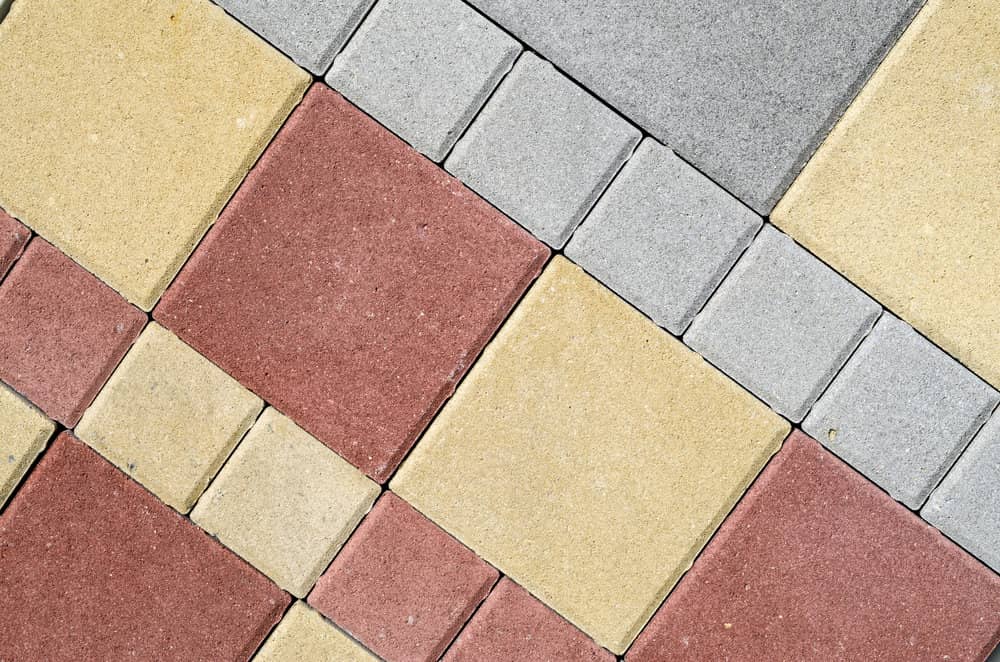
Colored concrete, also known as decorative concrete, allows traditional grey concrete to be stained and dyed different colors. Concrete has been colored as far back as the early 1900s and was primarily used by companies who made precast structures for building facades.
Example: Iron oxides are widely used as inexpensive, durable pigments in paints, coatings and colored concretes.
en: Hormigón coloreado
Cured Concrete
Noun
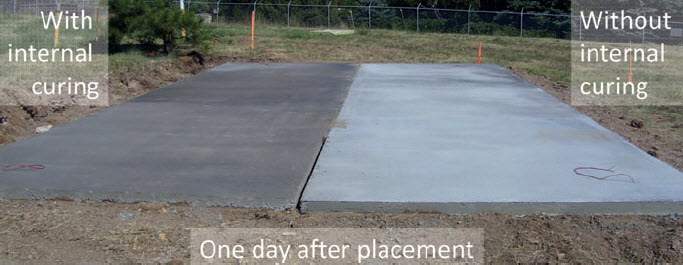
Curing of Concrete is a method by which the concrete is protected against loss of moisture required for hydration and kept within the recommended temperature range. Curing will increase the strength and decrease the permeability of hardened concrete. Curing is also helps in mitigating thermal and plastic cracks, which can severely impact durability of structures.
Example: It is obvious from the above discussion that internally cured concrete performed better as compared to control samples when subjected to curing conditions without the supply of external water.
en: Concreto Curado
Exposed Concrete
Noun
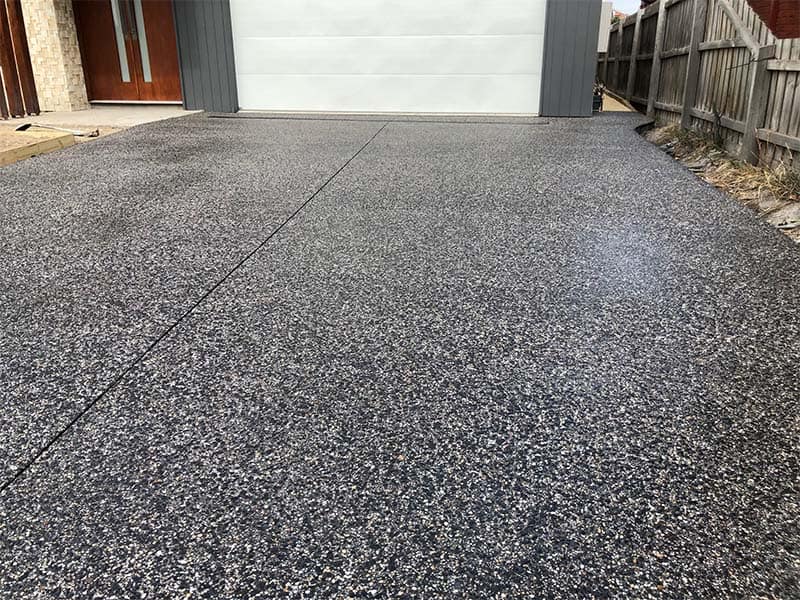
Exposed concrete refers to concrete whose surface is a visible part of the architectural and interior design of the building. Strictly speaking, this refers to concrete surfaces that were in contact with the formwork shell when they were produced.
Example: When architects suggest using exposed concrete blocks, some clients prefer to dress up the look.
en: Hormigón expuesto
Green concrete
Noun
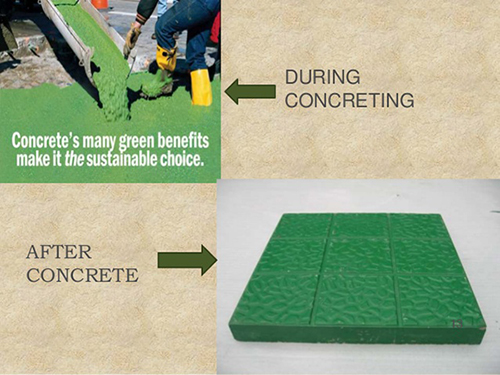
Green concrete is defined as a concrete which uses waste material as at least one of its components, or its production process does not lead to environmental destruction, or it has high performance and life cycle sustainability.
Example: Green concrete having better workability than conventional concrete.
en: Hormigón Verde
Insulating Concrete
Noun
Insulating concrete form work (ICF) is a building system that uses lightweight form work (made from an insulating material) to support concrete walls whilst they are being cast onsite and which is then live in place as insulation.
Example: American manufacturers have produced insulating concrete forms made with approximately 80 % recycled EPS since 1993.
en: Concreto Aislante
Porous Concrete
Noun
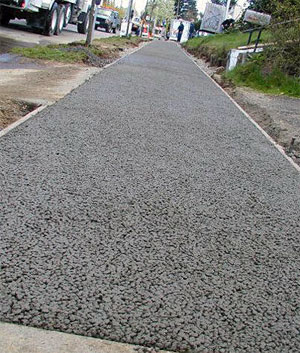
Porous concrete is concrete that is designed to trap water and allow it to percolate through to the ground below. There are a number of advantages to this type of construction, which have caused it to become a popular option for things like sidewalks, driveways, and parking lots. It is especially popular with ecologically conscious. Construction companies since it helps to manage water runoff in a sustainable way. Many so-called “green” builders promote its use in their projects.
Example: Concrete is by nature a porous material, with pores formed by water evaporation during curing.
en: Concreto Poroso
Precast Concrete
Noun
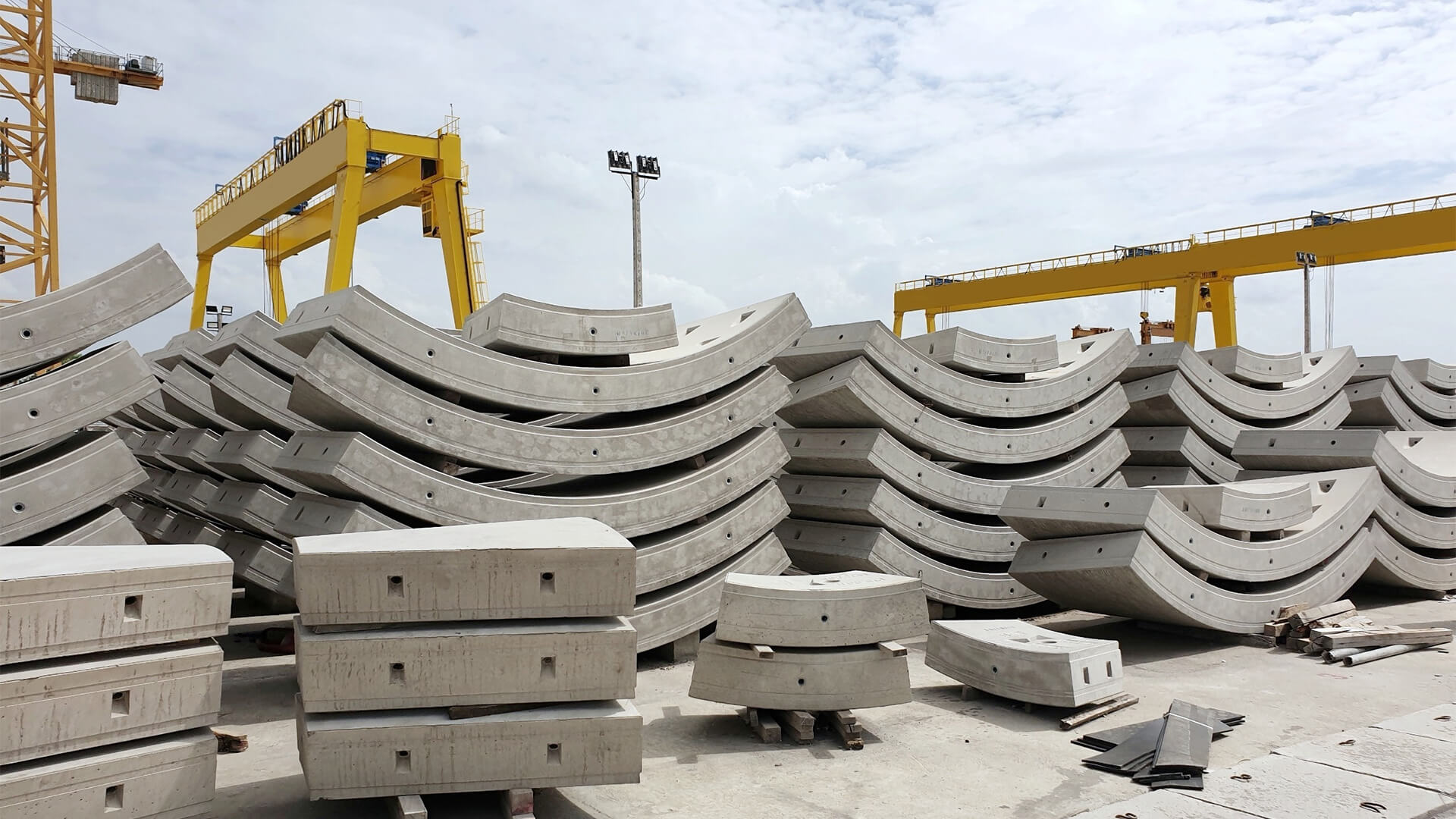
Precast concrete is a construction product produced by casting concrete in a reusable mold or "form" which is then cured in a controlled environment, transported to the construction site and maneuvered into place; examples include precast beams, and wall panels for tilt up construction. In contrast, cast-in-place concrete is poured into site-specific forms and cured on site.
Example: Crisp precast concrete slabs are teamed with brick, the latter helping to soften the overall surface.
en: Concreto prefabricado
Prestressed Concrete
Noun
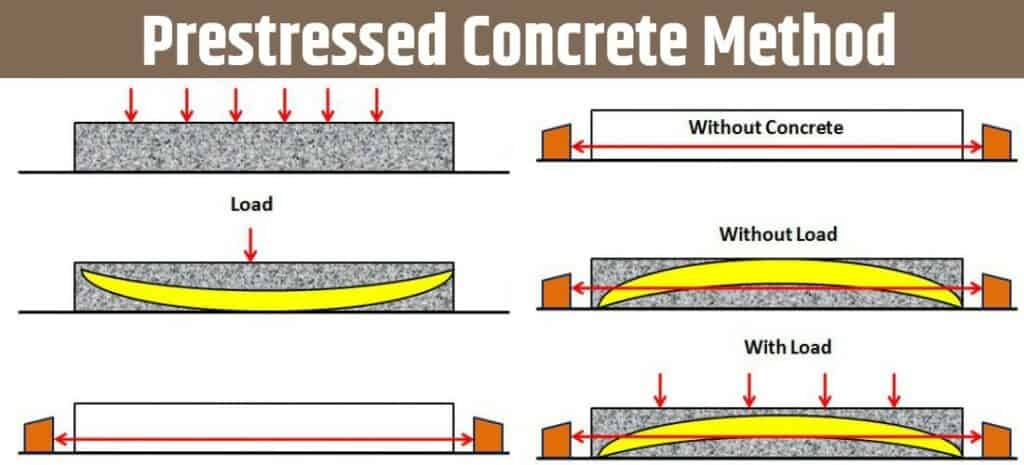
Prestressed concrete is a form of concrete where initial compression is given in the concrete before applying the external load so that stress from external loads is counteracted in the desired way during the service period. This initial compression is introduced by high-strength steel wire or alloys (called ‘tendons’) located in the concrete section.
Example: The prestressed concrete bridge is long and the longest span on the bridge is.
en: Hormigón pretensado
Reinforced Concrete
Noun
Reinforced concrete, concrete in which steel is embedded in such a manner that the two materials act together in resisting forces. The reinforcing steel—rods, bars, or mesh—absorbs the tensile, shear, and sometimes the compression stresses in a concrete structure. Plain concrete does not easily withstand tensile and shear stresses caused by wind, earthquakes, vibrations, and other forces and is therefore unsuitable in most structural applications. In reinforced concrete, the tensile strength of steel and the compression strength of concrete work together to allow the member to sustain these stresses over considerable spans. The invention of reinforced concrete in the 19th century revolutionized the construction industry, and concrete became one of the world’s most common building materials.
Example: The reinforced concrete deck slab acts compositely with the steel work.
en: Concreto Reforzado
Unreinforced Concrete
Noun
There is a growing trend towards the use of unreinforced concrete floors in slab designs. There are merits and concerns with this approach, especially in heavily-loaded forklift environments. There are many factors to consider in slab design for an owners particular usage, and an unreinforced solution should only be employed after carefully considering the advantages and disadvantages.
Example: It remains the largest unreinforced concrete dome in the world, weighing some 5,000 tons.